
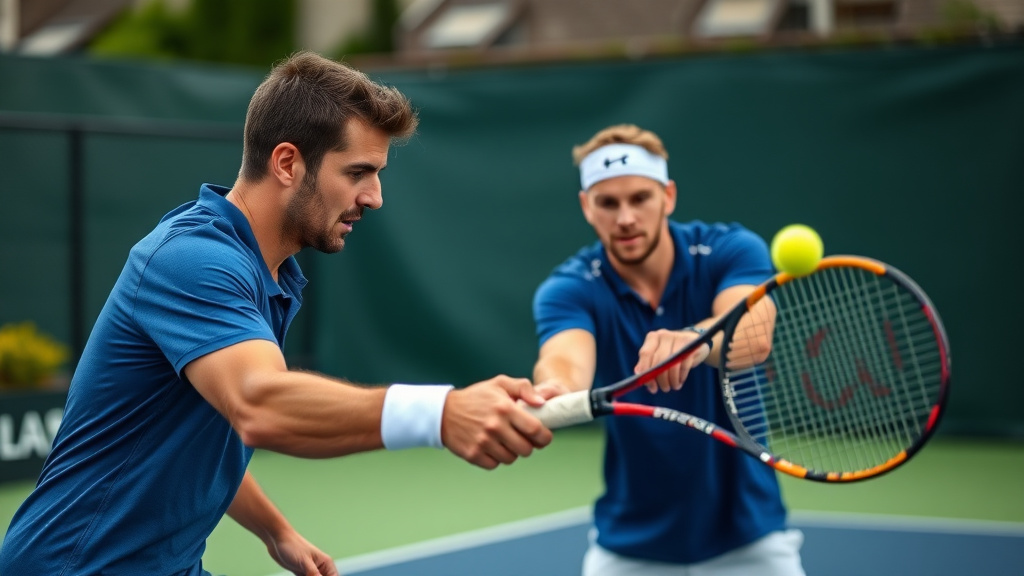
What sets apart Wimbledon champions from the rest of the tennis world? Beyond natural ability and competitive spirit lies a closely held arsenal of training secrets that elevate their game to remarkable heights. In this exclusive exploration, we reveal the rigorous conditioning programs, advanced training methods, and psychological conditioning approaches employed by tennis’s top performers. Discover how champions perfect their serving technique, develop lightning-fast court movement, and sustain elite-level play in high-pressure situations—insights that explain how these athletes consistently dominate the grass courts of SW19.
Advanced Physical Conditioning Techniques
Wimbledon champions employ modern conditioning approaches that transcend conventional tennis preparation. These elite athletes implement periodized training cycles that deliberately rotate between vigorous training sessions and recuperation phases. By adjusting training parameters such as volume, intensity, and duration, players improve their aerobic fitness and muscle stamina. Sport scientists collaborating with top players have designed customized training programs that focus on the particular challenges of play on grass courts, allowing competitors to preserve rapid force production throughout lengthy five-set contests while lowering injury likelihood.
Power development forms a cornerstone of contemporary Wimbledon preparation, with champions prioritizing movement patterns that improve court performance. Rather than conventional weight training, these players emphasize multi-joint movements that build stability, rotational power, and side-to-side mobility. Medicine ball work, plyometric exercises, and resistance band work develop the kinetic chain essential for explosive serving and rapid directional changes. Coaches meticulously program these sessions to enhance on-court practice, ensuring players build the strength endurance needed to execute demanding shots consistently during competitive matches.
Rest and recovery methods distinguish champions from competitors, as top-tier athletes understand that improvements happen during rest periods. Wimbledon-bound athletes employ sophisticated recovery strategies including cold therapy, contrast water therapy, and specialized massage therapies. Sleep optimization proves essential, with many champions following rigorous sleep routines and using sleep monitoring devices to track rest quality. These detailed recovery methods accelerate muscular recovery, minimize swelling, and enhance mental clarity—critical factors when playing consecutive matches across fortnight-long tournaments.
Range of motion training receives considerable emphasis in current professional training. Champions dedicate considerable effort to active flexibility work, yoga practice, and targeted mobility exercises that preserve maximum movement capability. This forward-thinking method reduces common tennis injuries while enhancing movement quality across the court. By maintaining superior flexibility, players deliver precision strokes with improved accuracy and decrease faulty movement habits that generate injury vulnerability. Integrated flexibility sessions guarantee athletes maintain toughness throughout grueling tournament schedules.
Sport-specific conditioning drills mirror match demands with striking accuracy, preparing champions for tournament intensity. Coaches design court-specific drills that replicate point-play sequences, motion sequences, and physiological stress experienced during match situations. These sessions incorporate alternating intensity protocols, switching maximal exertion with short rest intervals that reflect genuine match tempo. By conditioning metabolic pathways under match-specific conditions, players develop superior work capacity and competitive fortitude essential for navigating pressure-filled moments.
Metabolic testing and biometric monitoring have transformed how elite athletes enhance their physical preparation. Elite players undergo routine lactate threshold testing, VO2 max assessments, and body composition measurements to track conditioning progress. Live tracking systems provide coaches with instant feedback on athlete effort intensity during practice sessions, enabling accurate calibration of workout intensity levels. This evidence-based method removes guesswork, allowing personalized conditioning programs that optimize performance gains while preventing overtraining and burnout during critical tournament preparation phases.
Mental Resilience and Mental Coping Approaches
Mental resilience separates Wimbledon champions from their opponents. Elite players develop psychological strategies that allow them to maintain composure during pivotal situations, converting pressure into winning opportunities. Through structured psychological training, champions develop unwavering self-belief, emotional management, and the ability to recover from setbacks immediately. These psychological methods prove as important as physical conditioning, allowing players to perform at their best when stakes are greatest and opponents are strongest.
Visualization and Focus Training
Wimbledon champions use advanced visualization techniques to visualize matches before stepping onto the court. This practice encompasses vividly envisioning successful stroke completion, expected opponent reactions, and different match situations. By consistently practicing visualization of optimal performance, athletes strengthen neural pathways that support superior execution during live competition. Champions dedicate considerable time in visualization practice, treating mental rehearsal with the same intensity and dedication they apply to physical preparation, ultimately enhancing match readiness and competitive confidence.
Focus training constitutes another pillar of psychological preparation for professional tennis athletes. Champions build exceptional concentration skills, blocking out interruptions and maintaining singular attention on each point. Through meditation, mindfulness exercises, and targeted focus drills, players develop their mental capacity to remain present and engaged throughout full match duration. This improved mental sharpness enables champions to execute quick decisions, adjust strategies effectively, and maintain emotional equilibrium during demanding match situations on grass courts.
- Controlled breathing regulate nervous system during high-pressure matches
- Constructive internal dialogue strengthens confidence and mental strength
- Establishing routines establishes consistency and psychological anchors
- Competitive pressure practice builds competitive mental resilience
- Mindfulness training improves focus and situational awareness
Professional sports psychologists partner with Wimbledon champions, designing personalized mental strategies matched to unique performance patterns and behavioral patterns. These specialists conduct regular sessions reviewing performance information, detecting mental tendencies, and applying focused strategies. Champions keep comprehensive performance records tracking emotional states, attention quality, and performance catalysts across competitive events. This analytics-focused strategy to mental training promotes sustained progress and maximum psychological fitness for tournament success.
Specialized Court Abilities and Strategic Expertise
Grass Surface & Court Mastery
Wimbledon’s grass courts require dedicated preparation that extends far beyond traditional hard court preparation. Champions dedicate substantial training time to surface-specific training, practicing on actual grass surfaces to grasp how the ball moves differently. The reduced friction and quicker speed require adjusted footwork, modified serve techniques, and polished approach play. Elite players analyze grass court physics thoroughly, studying bounce variations and flight pattern shifts. This intensive surface training begins months before the tournament, confirming their muscle memory and tactical knowledge correspond exactly with Wimbledon’s particular playing environment and rigorous demands.
Tactical court placement proves essential on grass, where court positioning errors lead to immediate punishment. Champions develop outstanding predictive abilities through specialized drills that emphasize quick positioning and aggressive net play. Their training includes high-speed reaction exercises and match-like situations specific to grass conditions. Mental preparation centers around adapting to the court’s variable nature while maintaining composure during rallies. Advanced video analysis systems help players recognize ideal court positions, court coverage strategies, and movement efficiency. This comprehensive approach transforms possible vulnerabilities into competitive advantages, allowing champions to leverage grass court dynamics while minimizing their opponents’ opportunities.
Tactical Serve Development and Shot Placement Precision
The serve is tennis’s most manageable shot, and Wimbledon champions spend significant effort perfecting its execution. Their training programs prioritize serve variety, building various pace options, spins, and placements to maintain unpredictability. Champions practice serve placement with exacting detail, targeting specific court zones repeatedly until accuracy becomes automatic. Sophisticated technical assessment reveals optimal serving mechanics, optimizing both power and consistency. Training incorporates high-pressure scenarios mirroring tournament pressure, ensuring serves remain reliable during important situations. This systematic process transforms the serve into a powerful tool, often securing immediate victories or establishing favorable positions for follow-up shots.
Tactical serve placement extends beyond simple power delivery, integrating tactical court positioning and opposition assessment. Champions study their opponents’ return patterns extensively, pinpointing weaknesses and preferences that inform serve placement choices. Training sessions include simulated match scenarios where players practice serve selection based on specific game situations, opposition placement, and tactical objectives. Mental preparation focuses on serve confidence, enabling players to execute planned strategies when facing pressure without hesitation. This sophisticated approach views serving like a strategic puzzle piece rather than merely a stroke, giving elite players reliable edge in competition throughout tournament play.
Net Play Excellence and Volley Mastery
Clay-free playing surfaces favor attacking at the net, causing Wimbledon champions to build outstanding volleying abilities through intensive specialized training. Their practice regimens feature thousands of repetitive volley drills, developing feel, reaction time, and positioning sense essential to net dominance. Champions train at various distances from the net, refining shot angles, depth placement, and protective positioning. Sophisticated movement exercises enhance their ability to reach difficult volleys while maintaining balance and recovery positioning. Strategic instruction focuses on making choices near the net, instructing players when to strike hard versus defending carefully. This thorough net skill development turns scoring chances at the net into reliable point-winning positions, fundamentally altering match dynamics benefiting the champions.
Shifting from baseline to net requires seamless execution, a skill elite Wimbledon players refine continuously throughout their training cycles. Champions practice approach shots thoroughly, building accurate placement and control that sets up favorable net positions. Training incorporates footwork patterns that focus on efficient court coverage while maintaining aggressive court position. Psychological training focuses on composure in transition situations, empowering players to commit fully to offensive play without hesitation. Modern analytical tools monitor net performance metrics, revealing trends and development areas. This holistic method transforms transition play from sporadic strategic choice into a reliable, dominant feature of elite players’ competitive arsenals throughout Wimbledon competition.
